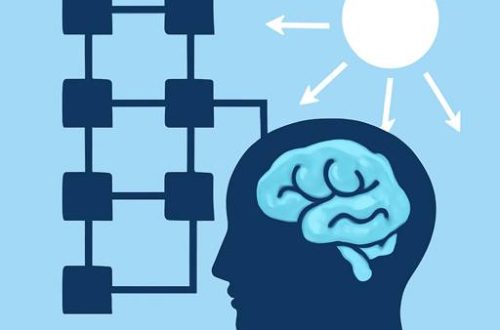
The Invisible Handshake: How EHR Integration Determines Whether Clinical Decision Support Gets Used
The Friction Factor: Why Integration Defines Adoption More Than Features
Clinical decision support tools are often evaluated on their content: the breadth of the evidence base, the quality of the guidelines, the speed of the search. Those factors matter, but they are not what determines whether a tool becomes part of everyday practice. Adoption is shaped first by workflow fit, and workflow fit is shaped by integration with the electronic health record. A decision support resource can be scientifically excellent and still go unused if reaching it requires leaving the patient context, opening a separate browser tab, logging in again, or retyping a question that the EHR already knows how to answer.
For clinicians, the EHR is not simply a documentation system. It is the operational centre of the clinical day. Hospitalists move between rounding, order entry, result review, and discharge planning inside the EHR. Primary care teams manage inboxes, refill requests, chronic disease registries, and visit notes in the same environment. Pharmacists perform medication reconciliation and interaction checks while working through the medication record. When decision support lives outside that environment, it competes for attention with the patient in front of the clinician. The extra cognitive load is small in isolation but cumulative across a shift. Every unnecessary click or context switch is a reason to skip the tool, especially when the clinical question feels urgent or the schedule is running late.
Integration changes the calculus. At its best, EHR integration means that evidence retrieval can be launched from within the clinical workflow, with patient context available and with the answer returning to the same screen or a closely connected view. It does not necessarily mean that every decision support tool must be embedded in every EHR in the same way. It does mean that the tool should respect the point-of-care reality: clinicians need answers where they are already working, not in a parallel digital space that demands separate attention. A hospitalist evaluating a patient with possible sepsis at 2 a.m. is unlikely to open a separate application and reconstruct the case from memory. A pharmacist checking a potential drug interaction is more likely to consult a cited source if the resource is reachable during medication review rather than after the review is complete.
The adoption lesson is straightforward but often overlooked: features do not overcome friction by themselves. A decision support tool can have excellent natural-language search, strong citations, and a clean interface, but if it is not integrated into the EHR-centred workflow, it remains an optional detour. Integration is the invisible handshake that makes the tool available at the moment of need. Without that handshake, adoption depends on individual clinician discipline and extra effort. With it, evidence retrieval has a chance to become a routine part of care rather than a separate task.
From Lookup to Workflow: What Integration Actually Changes for Clinicians
When decision support is embedded in the EHR, the question shifts from “Can I find the answer?” to “Can I verify the answer without leaving the patient context?” That is the promise behind AI clinical decision support EHR integration—not simply adding a search box, but connecting evidence retrieval to the clinical moment. A clinician should be able to ask a natural-language question, receive an evidence-based response with citations, and then check the underlying source material before acting. Integration is valuable when it shortens the distance between the question, the answer, and the verification step.
This matters across roles. A family physician managing a patient with newly uncontrolled hypertension may want to check current guideline recommendations before adjusting therapy. If the decision support tool is separate from the EHR, the physician may postpone the check until after the visit or rely on memory. If the tool is reachable within the workflow and returns cited guidance, the physician can review the evidence in context and then document the rationale. A hospitalist on rounds may need a quick evidence check about a diagnostic strategy or treatment threshold. A pharmacist may need to confirm a dosing recommendation or review primary literature behind an interaction warning. In each scenario, integration supports adoption by reducing the time and attention required to move from a clinical question to a cited answer.
Integration also changes the nature of the evidence conversation. Clinicians are not looking for a black-box answer; they are looking for a defensible answer they can verify. Citations and links to source materials are therefore not decorative features. They are part of the trust architecture. A platform such as ZoeMD, which returns evidence-based responses with citations and links to peer-reviewed journals and clinical guidelines, illustrates how natural-language questions can be paired with source material that clinicians can inspect. The tool is available on desktop, tablet, and mobile, but the deeper point is that accessibility across devices should serve the workflow rather than distract from it. AI supports, and does not replace, clinical judgment. The clinician remains responsible for interpreting the evidence in the context of the patient, the local pathway, and the clinical situation.
Privacy and security considerations also belong in this discussion. When decision support software is used with patient information, teams should think generally about data handling, access controls, audit trails, and governance. Claims of compliance should be evaluated carefully and specifically; a general discussion of HIPAA considerations is not the same as a guarantee. Integration raises these questions because it may involve exchanging context between systems. The adoption question is therefore not only “Does this tool fit the workflow?” but also “Is the workflow trustworthy, transparent, and appropriately governed?” Clinicians are more likely to adopt decision support when it respects both their time and their professional obligations.
Adoption Is a Trust Problem, and Integration Is Part of the Solution
Adoption of clinical decision support is often described as a technology problem, but it is at least as much a trust problem. Clinicians need to believe that the tool is returning current, relevant, and verifiable information. They need to see where the answer comes from. They need to know that the tool is not quietly replacing their judgment with an opaque recommendation. Integration helps only when it supports those expectations. A poorly designed embedded tool can add to alert fatigue, clutter the screen, or interrupt the clinical thought process. Integration is not automatically beneficial; it must be thoughtful, minimally disruptive, and transparent about its limits.
Trust is built through verification. A cited answer is more useful than an unsourced assertion because the clinician can check the primary source, compare it with local guidance, and decide whether it applies to the patient. This is especially important in high-stakes or ambiguous situations. A primary care team discussing a complex comorbidity may want to review the evidence behind a recommendation before changing a long-standing medication. A pharmacist may want to inspect the source behind a dosing suggestion. A hospitalist may want to confirm that a guideline has been updated since the last admission. In each case, integration supports trust when it makes the citation easy to reach and the source easy to review. It undermines trust when it hides the evidence behind a summary or makes verification cumbersome.
Real-world adoption often depends on small moments. A clinician has thirty seconds between patients and a question about a guideline threshold. If the decision support tool is integrated into the EHR and returns a cited answer quickly, the clinician may use it. If the tool requires a separate login and a new search, the clinician may move on. A pharmacist reviewing a medication list may want to check an interaction against primary literature. If the evidence source is reachable within the medication reconciliation workflow, the check is more likely to happen. These are not dramatic case studies, but they are the everyday scenarios that determine whether decision support becomes a habit or remains an unused resource.
Integration also has a governance dimension. Teams should ask how content is selected and updated, how citations are maintained, how patient information is handled, and how clinicians are trained to interpret the tool’s limitations. These questions are part of adoption because they shape whether clinicians see the tool as a trusted aid or as another source of uncertainty. The strongest position is neither techno-optimism nor reflexive scepticism. It is a clear-eyed view that AI and decision support can help clinicians find and verify evidence, but they do not replace clinical judgment. When EHR integration reduces friction, preserves context, and keeps citations visible, it gives decision support a better chance of being adopted for the right reason: it helps clinicians answer questions without pulling them away from the patient.

Marseille street-photographer turned Montréal tech columnist. Théo deciphers AI ethics one day and reviews artisan cheese the next. He fences épée for adrenaline, collects transit maps, and claims every good headline needs a soundtrack.

Théo Legrand
Marseille street-photographer turned Montréal tech columnist. Théo deciphers AI ethics one day and reviews artisan cheese the next. He fences épée for adrenaline, collects transit maps, and claims every good headline needs a soundtrack.