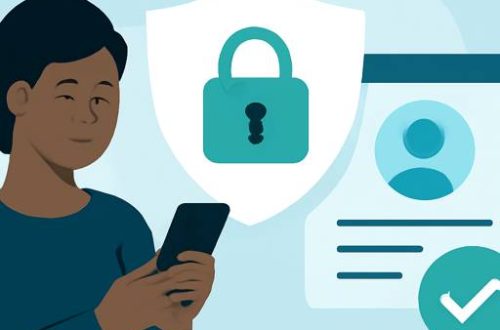
Beyond the Ballot: Data Privacy Considerations When Collecting Member Votes
Member votes are a cornerstone of democratic governance for unions, associations, clubs, boards and companies. Whether you are running an enterprise agreement ballot, a board election, an AGM poll or a simple club referendum, the collection of votes involves personal information. Balancing the integrity of the process with the privacy expectations of members is essential. This guide explores practical data privacy considerations for company secretaries, HR teams, committees and member organisations across Australia and the Asia-Pacific region.
Understanding the Privacy Landscape in Member Voting
Collecting member votes typically requires gathering personal information such as names, membership numbers, email addresses and sometimes postal addresses. It may also involve sensitive information if eligibility depends on employment status, union membership or other attributes. The first privacy consideration is to recognise the difference between authentication and vote attribution. Organisations need to verify that each voter is eligible and that only one vote is cast per member. However, this does not mean the final vote must be linked to the member’s identity in the results. Separating identity verification from ballot secrecy is a fundamental privacy principle.
In Australia, many organisations are subject to the Privacy Act 1988 (Cth) and the Australian Privacy Principles (APPs), which govern the collection, use, disclosure, security and retention of personal information. Other jurisdictions in the Asia-Pacific have their own privacy regimes. While this article is not legal advice, it is important to take a privacy-by-design approach from the outset. This means collecting only what is necessary, being transparent about why data is collected, and limiting its use to the stated purpose. For example, a union conducting an enterprise agreement ballot needs to confirm voter eligibility, but it does not need to retain a permanent record that links a specific member to a specific vote unless there is a legal requirement or a demonstrated need for an audit trail. Even then, access should be tightly controlled.
Member expectations matter. People are increasingly aware of how their data is used, and they may be reluctant to participate if they fear their vote could be traced back to them. A professional association running a board election with preferential voting, for instance, should clearly explain that the voting platform verifies eligibility but keeps individual ballots confidential. Similarly, a club holding an AGM should ensure that proxy forms and attendance records are handled with the same care as the ballots themselves. Over-collection is a common risk: asking for date of birth, phone numbers or other details that are not strictly required can create unnecessary privacy exposure. Adopting data minimisation and purpose limitation helps reduce risk while maintaining election integrity. The goal is to collect enough information to run a fair and verifiable process, but no more than that.
Key Privacy Considerations from Collection to Disposal
The privacy lifecycle of a member vote begins at collection and ends with secure disposal. At the collection stage, organisations should provide a clear and accessible privacy notice that explains what data is being collected, why it is needed, who will have access, how long it will be kept, and how members can exercise their rights. Consent may be required in some contexts, but even where consent is not the primary legal basis, transparency builds trust. For instance, when a union communicates with members about an upcoming enterprise agreement ballot, it should explain how the roll of voters is compiled and how the ballot will remain secret. This is also an opportunity to confirm that the voting platform uses secure authentication methods and does not expose individual choices.
Storage and security are critical. Personal information and vote data should be protected by access controls, encryption, audit trails and role-based permissions. Not everyone within the organisation needs to see member details or ballot records. A company secretary managing a listed company AGM, for example, may need to oversee the poll, but the independent returning officer and the voting platform should have clear separation of duties. Third-party providers must be carefully assessed. If you engage an external voting platform or an independent returning officer, conduct due diligence on their data privacy and security practices. Reputable providers can offer secure voting environments, audit trails and independent conduct; you can learn more about how such services can support privacy-conscious ballots. Contracts should include data processing terms, confidentiality obligations, breach notification requirements and clear instructions on retention and deletion.
Retention and disposal are often overlooked. Vote data should be kept only as long as necessary for the purpose it was collected, or as required by law or the organisation’s constitution. After the election results are declared and any dispute period has passed, organisations should have a documented process for securely destroying or de-identifying personal information. Aggregated and de-identified reporting can often meet governance and audit needs without retaining identifiable records. For example, an association might retain turnout statistics and the certified result, but delete individual voter records once the process is complete. Incident response planning is also part of privacy readiness. If a data breach occurs, the organisation should have a clear plan for containing the incident, assessing harm, notifying affected individuals and regulators where required, and reviewing what went wrong. These measures apply equally to a small club AGM and a large union ballot, though the scale and complexity will vary.
Building Member Trust Through Transparent Voting Processes
Privacy is not only a compliance obligation; it is a trust-building opportunity. Members are more likely to participate in elections and ballots when they understand how their information is handled. Clear communication can reduce anxiety about vote secrecy and encourage turnout. For a board election or committee ballot, the organisation should explain in plain language how eligibility is checked, how votes are cast and counted, and how the results are reported. If preferential voting or ticket voting is used, members should be assured that their individual rankings remain confidential even though the aggregate result is published. Similarly, in an enterprise agreement ballot, the employer or union should clarify that the vote is by secret ballot where applicable, and that the privacy of individual choices is protected throughout the process.
Transparency also means giving members a way to ask questions or raise concerns. A privacy contact or an independent returning officer can provide an additional layer of confidence. For example, a professional association conducting a board election might appoint an independent returning officer to oversee the process and handle any complaints about privacy or conduct. This separation can reassure members that the results are not only accurate but also obtained fairly. Training for staff and volunteers is another practical step. Everyone involved in the ballot—from the person updating the member roll to the helpdesk answering login queries—should understand the privacy rules, the importance of not disclosing voter choices, and how to escalate a suspected breach. Case studies from real-world member organisations show that a short briefing before an AGM or election can prevent common mistakes, such as emailing member lists without blind copying or leaving ballot papers unattended.
Finally, organisations should review their privacy practices after every major vote. What worked well? Were there any complaints or near-misses? Did the voting platform provide the audit information needed without over-retaining personal data? A club that runs an annual general meeting may have a simpler process than a national union with thousands of members, but the principles remain the same: collect less, protect more, be transparent and destroy securely. By embedding privacy into the planning of member votes, company secretaries, HR teams, committees and associations can uphold both the integrity of the ballot and the trust of their members. This approach is especially relevant across Australia and the Asia-Pacific, where member organisations operate under diverse privacy expectations and regulatory frameworks, yet share a common interest in fair and confidential voting.

Marseille street-photographer turned Montréal tech columnist. Théo deciphers AI ethics one day and reviews artisan cheese the next. He fences épée for adrenaline, collects transit maps, and claims every good headline needs a soundtrack.

Théo Legrand
Marseille street-photographer turned Montréal tech columnist. Théo deciphers AI ethics one day and reviews artisan cheese the next. He fences épée for adrenaline, collects transit maps, and claims every good headline needs a soundtrack.