Who Do You Really Look Like? Discover Your Celebrity Doppelgänger
Why People See Celebrities That Look Alike
Humans are wired to recognize faces quickly and to group similar facial patterns. When someone says two people are double takes of each other, it's often because shared features—bone structure, eye shape, nose profile, or jawline—create a similar overall silhouette. Cultural exposure also plays a role: the more you see a famous face in media, the more likely your brain will map other faces onto that template. That explains why some strangers seemingly always remind us of the same movie star or public figure.
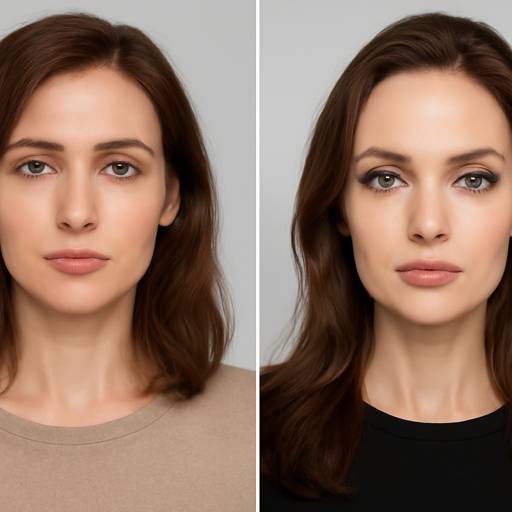
Perception of a match is influenced by several measurable elements. Proportions matter: the relative distance between eyes, length of the philtrum, and cheekbone prominence all contribute to facial identity. Hairstyle, facial hair, makeup, and lighting can either exaggerate or diminish those similarities, making someone look more or less like a celebrity under different conditions. Even expressions—smiles, raised brows, squints—accentuate familiar patterns that trigger recognition.
Social factors amplify the effect. When friends point out a resemblance, you begin to notice the similarities yourself and may adopt styles to emphasize that likeness. Pop culture also encourages comparison: magazines and social feeds love pairing everyday people with celebrities. For people searching phrases like celebrity look alike or looks like a celebrity, the thrill comes from seeing a concrete connection between your image and public figures, a mix of identity play and flattering association.
Technology now enhances this human tendency. Automated tools can identify key landmarks on a face and calculate similarity scores, moving perception from subjective to data-driven. If you want a quick experiment, try a service such as celebs i look like to compare your photo against thousands of celebrity images and see which famous faces register highest on those measurable traits.
How Celebrity Look Alike Matching Works
Modern celebrity look-alike systems use advanced face recognition and machine learning to produce fast, reliable matches. The process begins with an image upload. The system detects facial landmarks—eyes, nose, mouth, chin—and converts those points into a numerical representation known as an embedding. This embedding captures the geometry and appearance of the face in a format that algorithms can compare at scale.
Next, the algorithm searches a database of celebrity embeddings. Each celebrity profile has been processed the same way, so comparison becomes a matter of computing distances between vectors: the closer two vectors, the more similar the faces. This method allows the system to account for variations like pose and lighting, because embeddings normalize many superficial differences and focus on intrinsic facial structure.
To improve accuracy, systems often incorporate deep convolutional neural networks that have been trained on millions of faces. These models learn subtle features that human observers might miss and can weigh features differently depending on context—giving more importance to overall shape for some matches and texture details for others. Additional refinements include age progression handling, multi-photo averaging for celebrities, and optional filters for ethnicity or gender to produce more culturally aware results.
Privacy and quality controls are essential parts of the pipeline. Reputable platforms provide clear guidance on image quality—front-facing photos, neutral expression, and unobstructed faces yield the best matches. They also implement secure handling of uploads and often give users control over whether photos are stored. For queries like celebrity i look like or look like celebrities, the entire workflow is optimized to turn a single photo into a ranked list of possible matches with confidence scores and visual side-by-side comparisons.
Real-World Examples, Tips, and Ethical Considerations
Case studies show how look-alike matching is used across entertainment, marketing, and social platforms. Casting directors sometimes use similarity tools to find non-famous actors who resemble well-known characters. Brands run campaigns letting customers discover which celebrity their face most closely matches, boosting engagement. Individual users share startling results on social media—stories of relatives discovering a famous doppelgänger in family photos, or people using resemblance to inform style choices.
To get the best results from a tool, follow practical tips: use a high-resolution front-facing photo with neutral lighting, remove heavy makeup and accessories that obscure facial features, and try several images to account for variation in expression and angle. If you want matches that focus on a particular era or look, search or filter celebrity databases by decade, hairstyle, or role to refine outcomes.
Ethically, there are conversations to be had. Similarity search can strengthen identity play and confidence for some, but it can also raise privacy, consent, and bias concerns. Algorithms trained on skewed datasets may favor certain demographics, producing less accurate matches for underrepresented groups. Transparency about data sources, opt-in consent for storing images, and clear communication about limitations help address these issues. When exploring whether you “look like” a star, it's worth remembering that resemblance is a fun mirror, not a definitive identity label.
Beyond entertainment, look-alike technology is evolving into serious tools for historical research, forensic reconstruction, and cultural studies—helping experts quantify likeness across time and populations. Whether your goal is a playful shareable or a nuanced comparison, approaching these tools with curiosity and awareness yields the most rewarding and responsible experience when searching for look alikes of famous people or figuring out which public figure you resemble most.

Marseille street-photographer turned Montréal tech columnist. Théo deciphers AI ethics one day and reviews artisan cheese the next. He fences épée for adrenaline, collects transit maps, and claims every good headline needs a soundtrack.

Théo Legrand
Marseille street-photographer turned Montréal tech columnist. Théo deciphers AI ethics one day and reviews artisan cheese the next. He fences épée for adrenaline, collects transit maps, and claims every good headline needs a soundtrack.